Like Sandra Byrd on Facebook follow Sandra Byrd on twitter

Works in Progress

Bough Breakers

January 21st, 2012

There was an historic snow and ice storm in my town this week. Our home backs up to a thickly wooded area, so we watched the fir trees become slowly enrobed in snow and the deciduous trees become, twig by twig and branch by branch, sheathed in ice.  The most fascinating thing about this process is how weightless a solitary snowflake or a drop of water is, and yet how much damage can be wrought when there are hundreds, thousands, tens of thousands of them piling up upon one another.

Within a few days, the mighty trees began to weary. The deciduous, bereft of the ability to bend and yield, became brittle and snapped at the least blow of the wind. Whole branches abruptly snapped off,  leaving a forest of amputees. The firs, more flexible, held up better, but they also were more generous in catching and collecting snow, and after a certain weight, they, too, fell. The trees that seemed to make it all right were those who were able to lean into a mightier tree nearby, resting until the wind and snow stopped and the sun melted away their great load.

I thought how this reminded me of our Christian faith. We are not exempted from the ice that suddenly delivers many tiny, stinging troubles that pelt and pile upon us till we are ready to snap and break. Nor are we excused from heavier loads. This is not heaven yet. But we are given a promise, that we have Someone we can lean upon, upon whom we can rest and transfer the weight of our cares and sorrows. He props us, as it were, till the stormy cycle passes (and it always does) and our burdens melt away, allowing us to stand true and straight again.

“Come to Me, all who are weary and heavy-laden, and I will give you rest.”

Matthew 11:28

Hever Castle, Childhood Home of Anne Boleyn

January 3rd, 2012

Sandra Byrd
with Kate Eaton

Surrounded by a double moat, this historic castle began life as a lowly farmhouse on land awarded to Walter de Hevere by William the Conqueror in 1066. In 1270, Walter de Hevere’s grandson, William, built an impressive stone gatehouse and bailey on the site of the farmhouse. Tall, crenellated twin towers flanked the gatehouse, featuring cross-shaped arrow slits, a portcullis and a drawbridge to defend the castle. St. Peter’s Church at Hever is adjacent to the castle, and dates back more than eight hundred years.

The Boleyn connection to the castle began in 1459, when the property came into the hands of Geoffrey Bullen. Bullen was a wealthy mercer, or dealer in expensive fabrics, who became Lord Mayor of London the same year. His rise in prominence, first as an alderman and then as Lord Mayor, would have required Sir Geoffrey to maintain a home befitting his station. He was responsible for transforming the stone fortification into a comfortable and impressive Tudor dwelling for his family. Geoffrey Bullen’s son, William, inherited the castle from his father, and then in 1505 passed it down to his own son, Sir Thomas Boleyn.

Historians don’t agree on whether or not Anne Boleyn was born at Hever Castle, but it’s certain she lived at least part of her childhood there. It isn’t hard to imagine Anne and her siblings, Mary and George, running through the ancient bailey walls, strolling along the nearby River Eden and exploring the imposing twin towers.  Most certainly, the sturdy walls of the castle’s Long Gallery were the site of many leave-takings as both Anne Boleyn and her sister, Mary, traveled back and forth from England to France. An interesting architectural note, common among the great homes of this era—the sisters’ bedrooms were actually quite small and cramped in comparison with Hever Castle’s public rooms.

There were no doubt dozens of servants in a house this size, not only to care for the Boleyns and their home, but also to attend to the large stables and expansive grounds at Hever Castle. The expectation that the Boleyn family would entertain traveling nobility expanded the household regularly. Henry VIII, himself, did eventually come to this castle in the English countryside. Under the bows of an ancient oak, King Henry made known his affection for the fascinating Anne Boleyn. He would visit Hever Castle several times during his pursuit of Anne. This lovely castle with a fascinating history remained in the Boleyn family until the death of Thomas Boleyn in 1539, at which time it reverted to the Crown.  Hever was among the properties Henry awarded to his wife Anne of Cleves when he divorced her.

Resources:
http://www.hevercastle.co.uk

http://www.timetravel-britain.com/articles/castles/hever.shtml

A Tudor Christmas: Part Three

December 18th, 2011

by Wendy Pyatt

Tudor Christmas Gifts

The Tudors gave gifts at the New Year. Every important person was expected to give the monarch a New Year’s gift and then receive one in return. This was considered so important that a list, called the Gift Roll, of all gifts was kept. Acceptance or rejection of a gift was vital as this quite often had a hidden meaning! For example, in 1532 Henry VIII accepted Anne Boleyn’s gift but rejected Katherine of Aragon’s; Anne and Henry were married the following year.  The women of Henry’s court are listed as giving him embroidered shirts, and other craftsmen would show off their skills, too. For example, the Hans Holbein painting of Edward was given as a Christmas gift.

Another example of the meaning behind Tudor gift-giving occured when Sir Philip Sidney enraged Elizabeth I by suggesting she should not marry; for the New Year he gave her a jeweled whip to show subjection to her will. In 1568 Elizabeth I was given a pair of cambric sleeves by Mr. Adams, schoolmaster of Queen’s pages.

Robert Dudley, Earl of Leicester, was a very successful gift giver; he gave silk stockings in the 1st year of Elizabeth’s reign and also possibly the world’s first wrist watch. Epigrams were often sent as New Year’s gifts and contained one or two verses, like a short poem, usually with a sarcastic or satirical thought. From 1582 Elizabeth began to receive New Year gifts of gold, silver and rock crystal handled forks – forks were new to the country, and therefore, to court!


A Tudor Christmas: Part Two

December 10th, 2011

by Wendy Pyatt

Tudor Christmas Traditions

Christmas and New Years was the greatest festival celebrated by the Tudors. Advent was a time of fasting; Christmas Eve was particularly strictly kept with no meat, cheese or eggs. Celebrations began on Christmas Day when the genealogy of Christ was sung while everyone held lighted tapers. The Monarch was required to attend mass and would be expected to wear new clothes. He would progress from the Privy Chamber to the Chapel Royal dressed in coronation robes of purple and/or scarlet complete with crown.

The whole 12 days of Christmas was celebrated (25th December – 6th January), but not every day was celebrated equally. All work stopped except looking after animals; spinning was even banned as this was the most common occupation, for women and flowers were placed around the spinning wheels. People would visit friends and it was seen as very much a community celebration. Work re-started on Plough Monday, the first Monday after 12th night.

In Tudor Times the most sumptuous feast were held on 25th Dec, 1st Jan and 6th Jan. In 1532/33, the preparation for the 12th night feast at Greenwich palace required the building of a temporary boiling and working house. Up to 24 courses would be served, much more than was needed for the guests but it was a status symbol. Left over food was always used to feed the poor.

Tudor Christmas had a definite purpose. Because society was very strictly organised, these celebrations acted as a pressure release, a time when everything was turned on its head, the world turned inside out and upside down. Certain sections of society were even allowed an unusual degree of freedom. For example, in ecclesiastical communities, the tradition of the boy bishop was practised. A choir or alter boy would be elected for a short period either on 6th December (St Nicholas Day) or 28th December (Holy Innocents Day) with the idea being that it showed the boys the honour and dignity of holy orders. This was banned in 1541 because it was seen as mocking the church authorities and by implication the head of the church, who of course was Henry VIII. However, the practice possibly dates back to the 10th century and never completely died out. The tradition is still continued at Hereford, Gloucester, Westminster (RC) and Salisbury cathedrals to this day.

There was a similar tradition in secular circles. They had the Lord of Misrule. He was like a mock king and supervised entertainments or rather unruly events involving drinking, revelry, role reversal and general chaos. One of the games the Tudors would have been familiar with was Blind Mans Bluff! The inspiration for this Lord of Misrule was the earlier 11th century tradition of The Feast of Fools.

Another example of role reversal which started in the Tudor period is that of Barring Out, where pupils would take possession of the school by locking the staff out until certain demands regarding playtimes and homework were met. It was particularly common in Northern counties and was usually around the 6th December which is St Nicholas Day (the patron saint of children).

A favorite Tudor Christmas tradition was the performing of plays. There are records from the early 16th century that both Oxford and Cambridge colleges employed travelling players in their Christmas entertainments. There are also records of a play being performed for Cardinal Wolsey at Grays Inn during Christmas 1526. Coventry mystery plays which the Coventry carol was written for, tell the story of Herod’s murder of the innocents. Mystery plays are still performed in Coventry even today.

The Tudors also possibly practiced the Viking custom of burning a Yule Log. The Log would be decorated on Christmas Eve for the 12 days of Christmas and then burned. It was considered lucky to keep some remains to help light the following years log.

All sports on Christmas day were banned by Henry VIII in 1541 (except archery of course). In theory gambling, tennis, bowls and other games were forbidden to all but the very wealthy except at Christmas! Jousting was also a popular sport during the Christmas period.   In 1551, Edward VI passed a law that everyone had to walk to church on Christmas day; it’s still on the books today. A Tudor Christmas was always a 2 week period of concerted power, politics, and networking as the monarch would be surrounded by courtiers, nobility and other important people.


Originally published at www.localhistories.org


A Tudor Christmas: Part One

December 6th, 2011

by Wendy Pyatt

Tudor Christmas Decorations

The Tudors did not have Christmas trees, although they were around in the 16th century. Those are a Baltic/northern German tradition and even then, they are not recorded until about 1520. The first known record of a Christmas tree was in Riga, Latvia.

The decorations the English in Tudor times would have used would have included natural evergreens like holly, ivy, yew, mistletoe, box and laurel. They would not have decorated their  houses until Christmas Eve as it was thought to be unlucky to do it before then. The more modern tradition of fairy lights is said to originate from the 16th century “Legend of Martin Luther”. Luther was walking in the snow-covered woods and, seeing stars through the trees, was struck by their beauty. He took a tree home and put candles on it; that’s why we have fairy lights!

Tudor Christmas Carols

The earliest recorded collection of Christmas carols dates from 1521, published by Wynken de Worde, and includes The Boars Head Carol. Carol means “a dance with a song” and carols flourished throughout Tudor times as a way to celebrate and to spread the message of the nativity. Other Christmas carols the Tudors would have been familiar with include The Coventry Carol, While Shepherds Watched, The First Nowell, Angels from the Realms of Glory, Ding Dong Merrily on High (French in origin), In Dulci Jubilo, and We Wish You a Merry Christmas. Wassail carols, of which there are  many, were also popular and most areas of the country have their own version.

Originally published at www.localhistories.org


The Art of Courtly Love

November 21st, 2011

The art of courtly love and chivalric romance so popular during the early medieval period saw a revival during the Tudor era. Because the majority of noble marriages were arranged, with the focus being on financial or political gain, courtly love was a gentle, parrying game of flirtation wherein people might express true, heart-felt affections.

According to historian Eric Ives, “The courtier, the ‘perfect knight’, was supposed to sublimate his relations with the ladies of the court by choosing a ‘mistress’ and serving her faithfully and exclusively. He formed part of her circle, wooed her with poems, songs and gifts, and he might wear her favor and joust in her honor … in return, the suitor must look for one thing only, ‘kindness’ – understanding and platonic friendship.” Many of the plays and entertainments in Henry the Eighth’s court reflected these values and Henry himself, early in his reign, was very chivalrous and courtly indeed.

Andreas Capellanus, in his definitive twelfth century book, The Art of Courtly Love, set out to inform “lovers” which gifts could be offered, (among them a girdle, a purse, a ring, or gloves) and to clarify the signs and signals that indicated such a love game was underway – or on the wane.  This way the participants, and those around them at court, would know that the game was afoot.  Physical attraction was one of many factors in courtly love, but sexual expression was not necessarily an element of the relationship. Cappellanus further posits that a beautiful figure, excellence of character, and extreme readiness of speech are required for a man or woman to fall in love, with character being the most noble element
of all.

The longest game of courtly love, played out before all of Europe, was undoubtedly between Anne Boleyn and Henry VIII.  The relationship started out as courtly flirtation but as sometimes happened, it then progressed to a more serious, deeper connection with a significant goal in outcome and purpose.  Although their courtly relationship did not follow each of the thirty-one rules Capellanus lists from the “King of Love,” it did dovetail with some of them – a few of which have been examined below.

Rule II. He who is not jealous cannot love. This rule immediately brings to mind the incident between Henry and Thomas Wyatt during a game of bowls. Thomas Wyatt used one of Anne’s ribbons and bauble to mark distance, and he meant to use it to provoke or test Henry’s jealousy.  Henry, predictably, flew into a possessive bluster.  Anne recovered nicely from Wyatt’s foolishness, but there was no further doubting that she was Caesar’s and not to be touched.

Rule IV. It is well known that love is always increasing or decreasing. One of the most extraordinary things about Henry’s affection for Anne is that she was able to not only capture it but build upon it over a remarkable period of time – seven years from 1525 when it was clear he had fallen for her, to 1533 when their public marriage took place – allegedly,  without physical consummation. He did not become bored or disinterested in her companionship. This was no mean feat when one considers Henry’s short attention span. He wrote tender love letters to Anne, some of which still exist, a powerful demonstration of his growing love as Henry loathed writing.

Rule XI. It is not proper to love any woman whom one would be ashamed to seek to marry. Much has been made of the fact that Anne “held out” sexually from Henry for personal reasons, and that Henry wanted his heirs by her to be legitimate, two among other valid reasons why they did not simply have an affair. But there is strong evidence to suggest that Henry found Anne worthy of marriage – he crowned her –and took great pride in displaying her before all the court. In Anne it is clear that for some time Henry believed he’d found a spirited soul mate who was as vibrant as he was and he desired for her to be his wife.

Rule XIV. The easy attainment of love makes it of little value; difficulty of attainment makes it prized. We’re often reminded that Henry left his wife and broke away from the Roman Catholic Church during his pursuit to marry Anne, courting war and ill will in the process. But Anne, too, made sacrifices.  Her child-bearing years were quickly slipping by; there was a rush to judgment as she was reviled by much of the populace as a usurper; she had no official role nor position; and, finally, there was no guarantee that she would even have her marriage.  Both of them risked much. Only one of them, in the end, lost everything.

Rule XXVIII. A slight presumption causes a lover to suspect his beloved. In the end, it took very little to convince Henry that Anne had betrayed him, a ridiculous acceptance of circumstances that demanded Anne be in places she clearly was not and act in ways that would never have gone unnoticed and that were in stark contrast to her character. One must ask, why? Cappellanus answers that question for us, too. “…when love has definitely begun to decline, it quickly comes to an end unless something comes to save it.”

At the point when the King’s affections began their precipitous drop, long after their game of courtly love was over and well into their marriage, the only thing that could have saved Anne was the son she miscarried.  Chivalric values included integrity, protecting the vulnerable, and acting with self-sacrificing honor. Sadly, Henry did not turn out to be the “perfect knight” Ives speaks of.  In Capellanus’s concluding section, The Rejection of Love, he references, “…lovers who have been driven by love to think of killing their wives and they have even put them to a very cruel death – a thing which all will agree is an infamous crime.”

Unfortunately, this evil came to pass.  In Anne’s final months, Henry was likely not driven to this crime by love of another woman, although he clearly had one in mind, but perhaps primarily out of love for himself, a nonvalorous motivation indeed.

Written by Sandra Byrd, this article first appeared at the website On The Tudor Trail.  Please visit that site for a treasure of riches about Anne Boleyn.


Building the Bridge

November 5th, 2011

by Christy English

Every creator painfully experiences the chasm between his inner vision and its ultimate expression.  The chasm is never completely bridged.  We all have the conviction, perhaps illusory, that we have much more to say than appears on the paper.  ~ Isaac Bashevis Singer

As a writer, I can definitely vouch for the second part of this quote. I do have a lot to say, and not all of it makes it to the page. In many ways, this is a blessing. The Delete Key and the waste basket are two of a writer’s best friends. Though a first draft requires that I turn my inner editor off, the second, third and fourth drafts live for and with that inner editor, making the book better, honing the novel along with my craft.

The first part of this quote is also true. We all cringe at the distance between what we mean to say, and what comes onto the page. There is always more beauty in us than we can express, depths that we can not always reach. But we sit down at the computer anyway, and reach for the best within us. The chasm as Mr. Singer says may never be completely bridged. But that chasm is where the good stuff is. The effort to reach across it, to make my work better than it was yesterday, is part of the reason I stay in the chair. I hope by the end of my life to have built a better bridge between the beauty of a project as I see it in my mind, and the beauty that makes it onto the page. It is a bridge worth building, even if it is never finished.

Find out more about author Christy English at her website: http://www.christyenglish.com/

Seeking to be a One Term Writer

October 7th, 2011

No matter what our political affiliation or lack thereof, most of us are irritated by the fact that our elected officials seem to spend more time, creative energy, and enthusiasm campaigning for the next term rather than delivering what was promised for the current term. When I watch them on TV I want to shout, “Just get to work!”

Why would we re-elect anyone to do a job they aren’t faithfully doing right now? Businessman Bob Johnson, in an interview with CBS news, urged today’s politicians to, “simply sacrifice your political job for the job that American people want you to do. That’s as simple as that. Be willing to be a one-term congressperson. Be willing to be a one-term president, be willing to be a one-term senator. Take that position. That the issues before the country are far greater than me returning to Washington and starting the same old treadmill over again.”

It struck me, then, that is often how we writers work. We, too, have “terms.” Most of us write from contract to contract, with no promise that there will be a job after we type “The End” at the conclusion of a manuscript, or at the submission of a short story, blog, or article.  This can lead to understandable worry, over-thinking and planning the next move, strategizing to save or build a career. We can obsess over amazon rankings, fret that someone seems to be getting more gigs than we are, stay vexed over a friend who has heard from an agent while our inbox is mostly filled with sales pitches and spam. We might find ourselves envious if someone else has scored a regular periodical or blogging gig while we’re still hustling for important contacts or networks.  We obesess about the changing nature of the market.  Or foster anger at people who have “names.”  Worst of all, worrying about what job comes next steals the joy we have in writing and drains creative energy that we could be pouring into the project right in front of us!

I can’t remember who offered this writing insight, but it’s brilliant: When you begin to hoard your best ideas, phrases, time, energy and excitement for the next work, you’re in trouble. They need to go into THIS book, this proposal, this idea, this article, this paragraph, this pitch, everything that’s on my screen (or should be!) today. When I’m worrying about my career, my mind is not free to explore the story I’m telling right now, which leeches it of its life. This nudges writers toward self-fulfilling the doom prophecy we’re concerned about in the first place. Instead, I must press on with today’s task and trust that the manna will fall tomorrow, and next year, too.

I want to tell politicians: Do the job you’ve already said you were going to do. Follow through and meet the promises that you’ve already made; I believed in you when you spoke them, I caught your vision.  I know you have the right stuff.  If you deliver on that promise, I’ll be eager to elect you for the next term, even if you’re not perfect. If not, I might have to move on. If you’re running for office for the first time, show us something fresh, something unusual, something that changes the game just a little.

I suspect our readers might be thinking the very same things.

Rice Balls

September 19th, 2011

Rice Balls
Serves 10 (approximately 36 rice balls)

Rice balls like these, today known as “arancine” or little oranges, are still made in many parts of Italy. During the Renaissance and Elizabethan eras these savory balls would have been colored purple or yellow with dried edible flower petals or saffron. This dish can be easily recreated using food coloring to produce the different colored balls. Of course, they are delicious without the coloring!

1 pound Italian rice (such as vialone or origianario rice)
1/3 cup cream
1 large egg, beaten
1 cup grated caciocavallo cheese
2 tablespoons sugar
Yellow food coloring (optional)
Purple food coloring (optional)
3/4 cup vegetable oil
1/2 cup flour or dried bread crumbs

Cook the rice according to the package directions. Combine the cooked rice, cream, egg, cheese, and sugar in a large bowl. Cover and refrigerate until thoroughly chilled, or up to 2 days.

If desired, divide the rice into 3 equal portions. Using the food coloring, color 1 portion bright yellow, 1 portion purple, and leave the remaining portion white.

Form each of the portions of rice into 1 inch diameter balls.

Place the flour or bread crumbs on a flat plate. Heat 3 to 4 tablespoons of oil in a skillet over medium-high heat. Lightly roll 1 color of the rice balls in the flour or bread crumbs. Cook, turning occasionally, until completely browned on all sides. Remove the rice balls from the pan and drain on paper towels. Discard the oil in the pan, wipe it clean, and repeat the process with the remaining rice balls.

© Shakespeare’s Kitchen: Renaissance Recipes for the Contemporary Cook by Francine Segan.

Life of Tudor Women, Part Two

September 5th, 2011

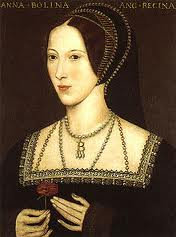
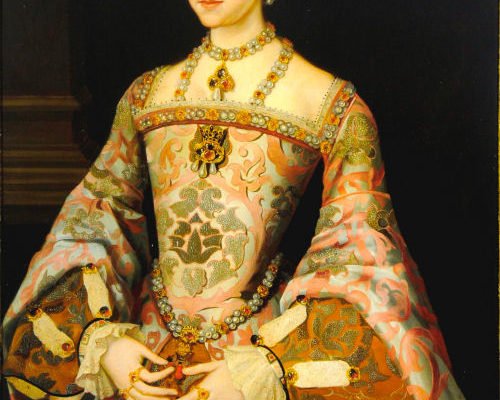
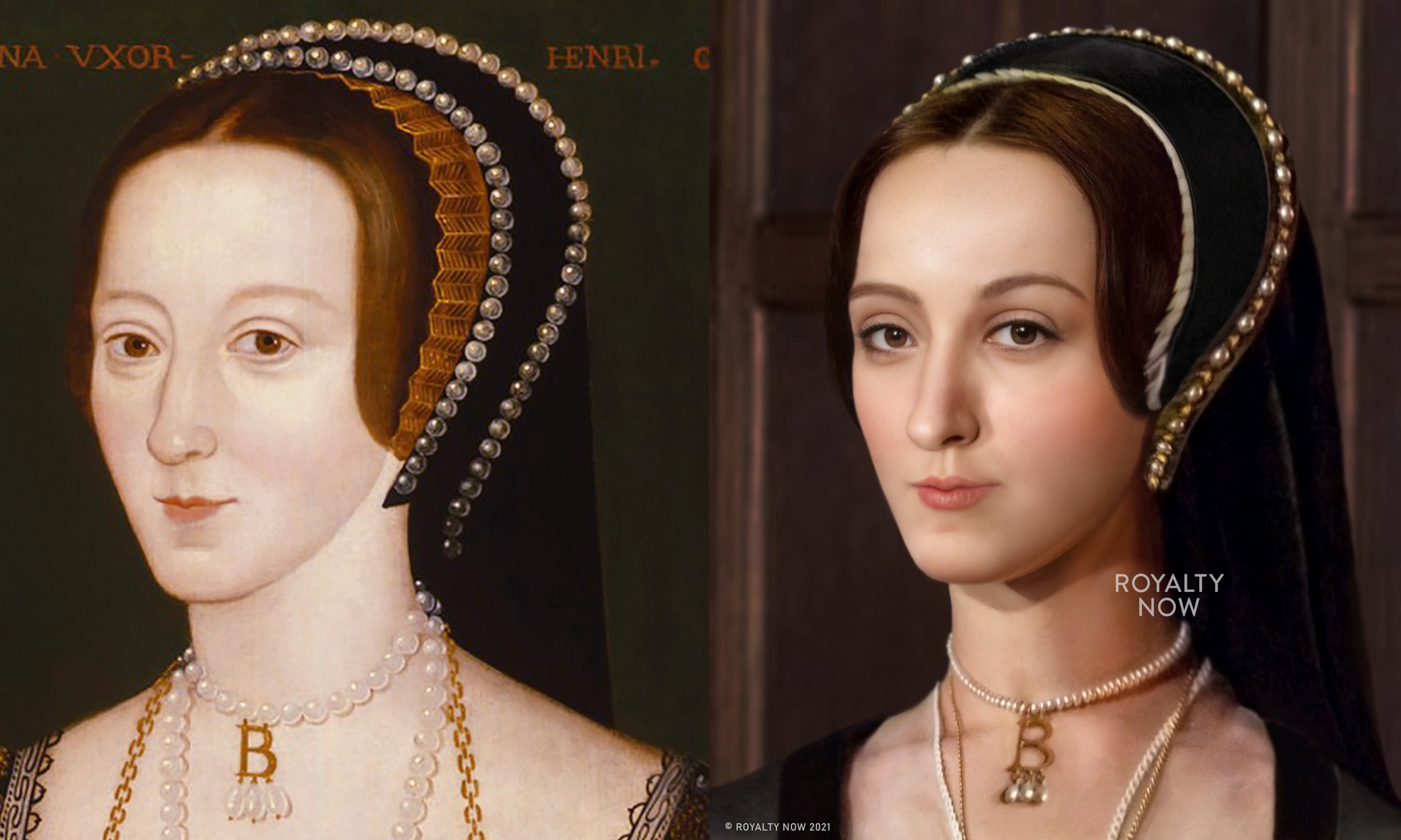
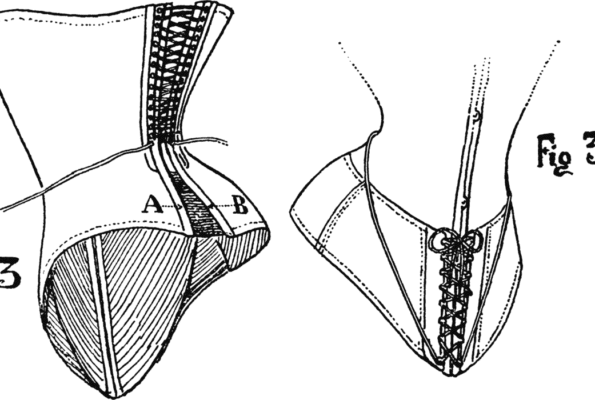
Tudor Women and Fashion Rules It’s hard to imagine being told what fabrics and colors you could wear, isn’t it? Sumptuary Laws in place during Tudor times regulated the wearing of rich fabrics to the upper classes, the number of meal courses to be served for specific guests, and the purchases of luxuries allowed for each social class. Henry VIII, in particular, was concerned about the rise of the wealthy merchant class with no connection to nobility, and so he revived and expanded the restrictions on clothing and other expenditures. For example, only members of the royalty were allowed to wear ermine, and only the nobility were allowed to wear clothing trimmed in fox or otter. Anne Boleyn was known for her stylish attire, she had it early and further developed it while in France. She brought French sophistication back to the English court and was known especially for her French hoods, and for adding each day a small, but different accessory to her wardrobe which was always fresh.

Tudor Women as Mothers Children were treasured in Tudor times as they are today. A woman would probably have had a child every one to two years. Many women died in childbirth due to poor medical hygiene, and the chance at least one of their children would die was significant. Consider that Catherine of Aragon is reported to have been pregnant at least six times, but had only one son who lived just a few days and one surviving daughter, Mary. Anne Boleyn was pregnant at least three times, perhaps four, but only Elizabeth survived. Kateryn Parr and Jane Seymour each bore one child and both women died of childbed fever. Even the most noble of women were not spared the grief of frequent miscarriages or stillborn children.

Giving birth for women of the noble class would have been a social event attended by the mother’s closest friends and a midwife arranged ahead of time. Doctors almost never attended births. Puerperal sepsis, or ‘childbed fever’, was common as handwashing was rarely practiced (by midwives or doctors.) A contemporary study for the UK’s National Institute for Health estimates the maternal death rate in the 16th century as 26 women per every 1,000 births. Compared to today’s figure in the UK of .11 per 1,000 women dying as a result of childbirth, you can see that childbirth was definitely a hazardous undertaking in Tudor times!

Tudor Women and Social Relationships Within the social structure of Tudor times, loyalty to family, especially family of origin, took precedence. For women of noble birth, that meant that advancing the social position of their families was their primary function. Oftentimes Anne Boleyn is seen as having been “pushed” toward marriage to Henry by a socially climbing family. The truth is, all families were social climbers and Thomas Boleyn was no different than other good men before and after in seeking to advance his house, often to disasterous consequence, but sometimes, to love. Betrothals and marriages, the ability to produce an heir and their connections as ladies-in-waiting to more highly-ranked nobles would have motivated the decisions made by and for noble women of this era.

The relationships they formed within noble circles would not only have been based upon similar personalities and interests, but also the other person’s ability to help them advance their family’s interests. It was common for young women in noble families to leave their families for extended periods to serve at court. One type of close relationship that was familiar to women of noble households was with long-time servants who served not only as employees but also as confidantes and go-betweens with others in the household. This is clearly seen in Meg Wyatt’s friendship with her longtime lady’s maid, Edithe.

Research Sources: Coventry.ac.uk; Elizabethan-era.org.uk; elizabethi.org; TudorsWiki; LocalHistories.org; NIH.gov